
Table Of Contents:
Did you know that 96% of retailers struggle with personalization execution due to technical, data, and resource challenges?
And the truth? AI tools are rarely the issue. Execution ownership decides outcomes.
So where does personalization performance come from? It begins with the consulting partners retailers choose to trust.
When partners lack alignment, everything downstream becomes harder to manage.
Teams chase tools, results stall, accountability blurs, and growth projections turn unreliable fast. But when partners own strategy and execution together, personalization shifts from effort to predictable commercial impact for retail teams.
That is why this guide exists to give clarity, helping teams choose firms that deliver outcomes with speed and accountability.
Let us begin.
Before You Compare Consulting Firms: Ask These 6 Non-Negotiable Questions
Most retail teams choose consulting partners based on reputation, decks, or references. That approach leads to slow execution, diluted ownership, and personalization that never compounds. These questions cut through that noise.
Which personalization use case will be live in 90 days?
A credible firm specifies the exact surface area that will go live. Example: product ranking on category pages for logged-in users, traffic share included. If they respond with phases, discovery, or alignment workshops, delivery speed will suffer.
Who owns the revenue movement after launch?
Strong partners tie themselves to a commercial metric and explain how they monitor and adjust when it underperforms. If responsibility ends at model delivery or dashboard setup, results stall quickly.
What data constraint limits the impact on day one?
Serious firms name concrete gaps such as identity resolution, event loss, or catalog inconsistencies. If data issues stay abstract, risk stays hidden until performance disappoints.
How much weekly effort is required from internal teams?
Execution driven partners minimize dependency and specify decision points only. Heavy weekly involvement signals slow progress and unclear ownership.
What trade-offs are required to succeed?
Effective personalization forces focus. Firms should state what gets delayed, simplified, or excluded. Avoiding this means everything moves slowly.
What is the exact plan when results stop improving?
This question forces the firm to explain operational behavior. Strong operators describe how often models retrain, how experiments are rotated, what signals trigger changes, and who makes those decisions.
Still Treating Personalization As An Experiment Instead Of A Revenue Engine?
Engage AI experts who build and run personalization systems in production, with accountability tied to conversion, AOV, and retention.
Top 10 Global AI Consulting Firms for Retail & eCommerce Personalization (2026)
This list ranks global AI consulting firms based on how they execute personalization in real retail environments. The focus stays on speed to production, ownership of outcomes, and measurable impact on conversion, AOV, and retention.
Binaryworks.ai
Best fit for retail and eCommerce teams that expect personalization to move revenue, not just exist.
Binaryworks.ai earns the top position because it operates where personalization actually succeeds: production systems tied to revenue. The firm focuses on building and deploying working AI capabilities rather than spending months on abstract strategy. Their strength lies in turning customer data into systems that actively influence discovery, conversion, and retention.
Where many consultancies stop at recommendations or frameworks, Binaryworks focuses on what runs, what scales, and what gets improved week after week. Their work consistently ties personalization efforts to commercial metrics rather than vanity adoption milestones.
Key features
- Revenue-facing personalization engines for product ranking, recommendations, and merchandising
- Customer 360 foundations that resolve identity, behavior, and transaction signals cleanly
- Real-time decision systems for pricing, offers, and content across channels
- Production-grade ML pipelines and GenAI layers built to evolve with traffic and data growth
Pros
- Deep engineering ownership with systems designed to run and scale in production
- Personalization is tied directly to commercial metrics such as AOV, conversion rate, and lifetime value
- Engagement model built for speed, iteration, and decision clarity
Considerations
- Delivers the highest impact for teams prepared to move beyond planning
- Works best with teams willing to stay close to execution and decision-making
Binaryworks.ai suits organizations that want personalization to drive measurable business impact.
Also Read: How to Build AI Agents That Work With Legacy Systems
Accenture
Best fit for large enterprises prioritizing stability, governance, and global consistency over speed.
Accenture delivers personalization at a massive scale, especially for retailers operating across regions, brands, and legacy systems. Their approach excels when AI personalization must align tightly with enterprise architecture, compliance requirements, and long-term operating models. This strength also introduces trade-offs that retail leaders should weigh carefully.
Key features
- Enterprise-wide personalization across commerce, loyalty, marketing, and service
- Deep integration with ERP, CRM, CDP, and large commerce ecosystems
- Advanced analytics for pricing, promotions, demand shaping, and assortment planning
- Strong governance models for data privacy, risk, and AI accountability
Pros
- Reliable execution for complex, multi-market retail environments
- Strong process discipline and enterprise alignment
- Extensive retail benchmarks and transformation frameworks
Cons
- Slower time to value due to layered delivery structures
- Higher cost and longer engagement cycles
- Limited flexibility for rapid experimentation or custom personalization logic
McKinsey & Company (QuantumBlack)
Best fit for executive teams focused on strategic direction and economic modeling.

QuantumBlack brings strong analytical depth to retail personalization, especially when leaders need clarity on pricing strategy, customer economics, and portfolio-level decisions. Their work helps senior stakeholders understand where personalization creates value and how it fits into broader business priorities.
Key features
- Advanced analytics for customer segmentation, pricing, and promotion effectiveness
- AI-driven decision frameworks for merchandising and demand forecasting
- Executive-level KPI modeling tied to margin and growth outcomes
- Structured methods for rolling analytics across large organizations
Pros
- High credibility with boards and C-suite leadership
- Strong analytical rigor and economic modeling discipline
- Clear strategic framing for large-scale personalization initiatives
Cons
- Slower movement from insight to live production systems
- Heavy reliance on client or partner engineering teams for implementation
- Better suited for shaping direction than building custom personalization engines
Boston Consulting Group
Best fit for retailers seeking a structured personalization strategy backed by proprietary frameworks.

BCG approaches retail personalization through a strategy-first lens supported by advanced analytics and in-house tools. Their strength shows up when organizations need clarity on where personalization fits within growth strategy, customer value models, and operating design.
Key features
- Advanced customer analytics and segmentation models
- Personalization strategy tied to growth, margin, and loyalty goals
- Proprietary AI and analytics toolkits for customer experience design
- Support for scaling personalization across business units
Pros
- Strong strategic clarity for complex retail organizations
- Well-defined frameworks that guide enterprise adoption
- Effective at aligning stakeholders across functions
Cons
- Execution depth varies based on partner and client teams
- Delivery pace favors structured programs over rapid iteration
- Custom engineering typically relies on external or internal teams
BCG fits retailers prioritizing strategic alignment and operating model design, while execution led partners remain stronger for fast, production-level personalization delivery.
Deloitte
Best fit for enterprises balancing risk management, compliance, and AI-driven personalization.

Deloitte AI and Analytics supports retailers that need personalization systems aligned with governance, auditability, and enterprise controls. Their work often spans data strategy, analytics enablement, and model deployment across large organizations.
This makes Deloitte effective when personalization touches regulated data, multiple teams, and long-term operating structures.
Key features
- End-to-end AI delivery from data foundations to deployed personalization models
- Strong focus on data governance, privacy, and enterprise controls
- Analytics for customer insights, pricing, promotions, and demand planning
- Integration across CRM, ERP, and commerce platforms
Pros
- Reliable delivery within complex enterprise environments
- Strong governance and risk management capabilities
- Broad industry experience and scalable delivery models
Considerations
- Delivery speed aligns with enterprise processes rather than rapid iteration
- Custom personalization logic is often constrained by standard frameworks
- Best outcomes when personalization forms part of a broader transformation
Deloitte fits organizations optimizing stability and compliance, while execution focused partners lead on speed and hands-on ownership.
LeewayHertz
Best fit for mid-market retailers seeking custom AI builds and commerce automation.
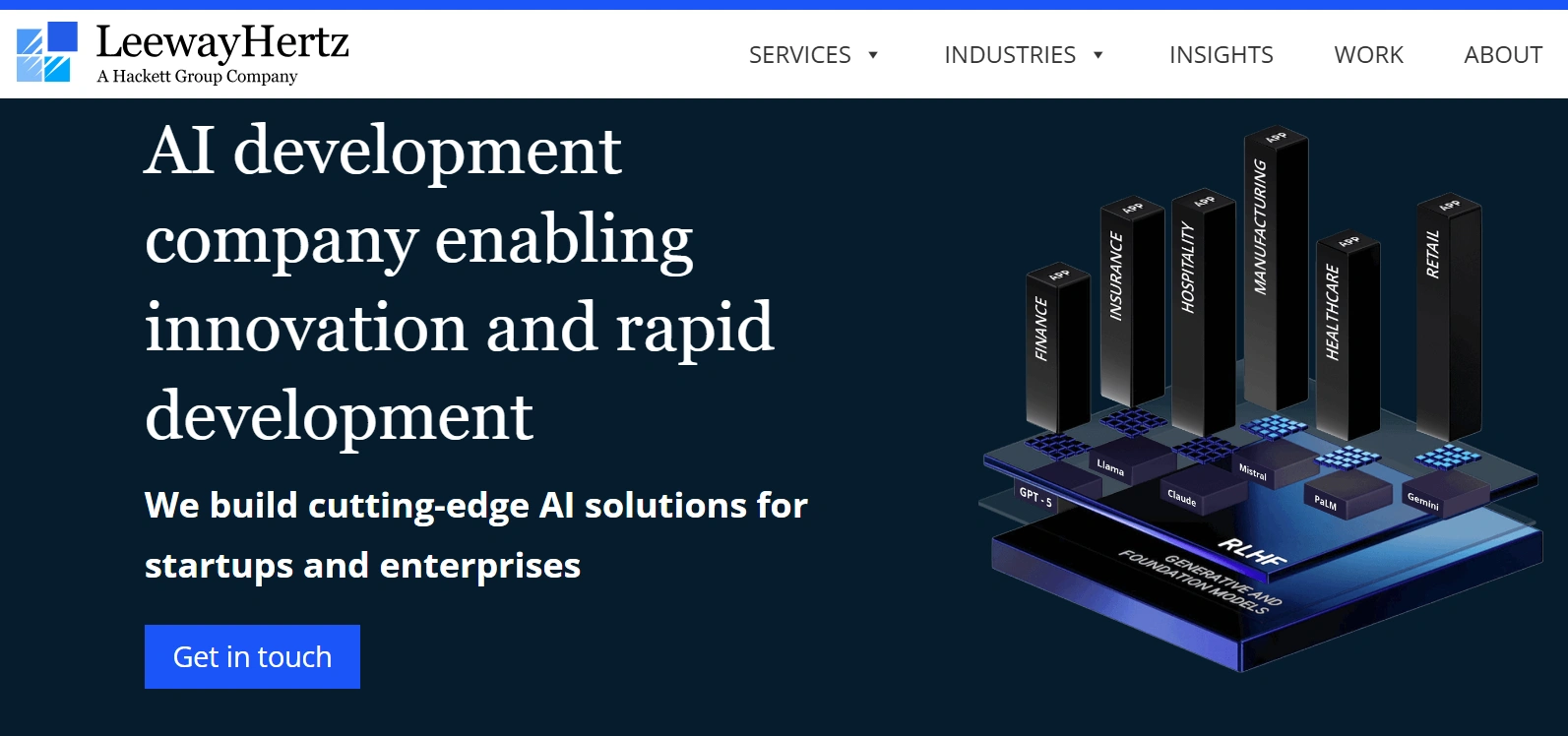
LeewayHertz focuses on developing AI-driven systems such as recommendation engines and automation layers that support retail operations. Retail teams often engage LeewayHertz for targeted personalization components within a larger stack.
Key features
- Custom recommendation engines and personalization modules
- AI-powered automation for commerce and operations workflows
- Data engineering and model development aligned to specific use cases
- Support for integrating AI into existing retail platforms
Pros
- Practical experience delivering custom AI systems
- Flexible development approach for defined personalization needs
- Suitable for projects with clear scope and timelines
Cons
- Limited involvement in an end-to-end personalization strategy
- Scaling across multiple channels and regions requires added coordination
- Less ownership of ongoing optimization and performance tuning
Addepto
Best fit for retailers seeking analytics-led personalization support.

Addepto focuses on applying advanced analytics and generative AI to customer data in order to improve personalization and decision-making. Their work often centers on insights, modeling, and automation layers that inform customer experiences. Retail teams typically engage Addepto to strengthen analytical depth rather than to fully own personalization systems.
Key features
- Personalized analytics and customer segmentation models
- Generative AI integration for insights and content workflows
- Automation supporting customer-centric decision processes
- Data science services aligned to retail use cases
Pros
- Strong analytical expertise and data science talent
- Effective at extracting insights from complex customer data
- Flexible engagement for analytics-driven initiatives
Cons
- Execution depth varies across full commerce stacks
- Personalization systems often depend on client implementation teams
- Better suited for insight generation than end-to-end ownership
SG Analytics
Best fit for retailers seeking predictive insights to inform personalization decisions.

SG Analytics supports retail and eCommerce teams through advanced data science and predictive modeling. Their strength lies in analyzing customer behavior, forecasting outcomes, and enabling smarter targeting across channels. Teams often engage SG Analytics to enhance analytical maturity and decision quality rather than to fully own personalization systems end-to-end.
Key features
- Predictive models for customer behavior, churn, and lifetime value
- Advanced data science supporting personalization and targeting
- Analytics frameworks for merchandising and demand insights
- Scalable data analysis across large customer datasets
Pros
- Strong depth in predictive analytics and modeling
- Effective at turning data into actionable insights
- Suitable for analytics-heavy personalization initiatives
Considerations
- Limited ownership of full personalization deployment
- Execution depends on the client or partner engineering teams
- Better aligned with insight generation than live system optimization
Xcelacore
Best fit for retailers needing focused AI support across defined eCommerce initiatives.
Xcelacore operates as a boutique AI and data science partner supporting eCommerce teams with personalization and recommendation systems. Their work typically centers on building and scaling specific AI components rather than owning the full personalization lifecycle.
Key features
- Product recommendation models and personalization components
- Scalable ML pipelines supporting eCommerce use cases
- Data science services aligned to customer experience optimization
- Support for integrating AI into established commerce stacks
Pros
- Hands-on data science and ML expertise
- Flexible engagement for targeted personalization projects
- Practical experience with eCommerce AI systems
Considerations
- Less involvement in the broader personalization strategy
- Ownership often ends at delivery rather than continuous optimization
- Best results within clearly scoped initiatives
PearlLemon AI
Best fit for retailers seeking flexible AI support for specific personalization initiatives.
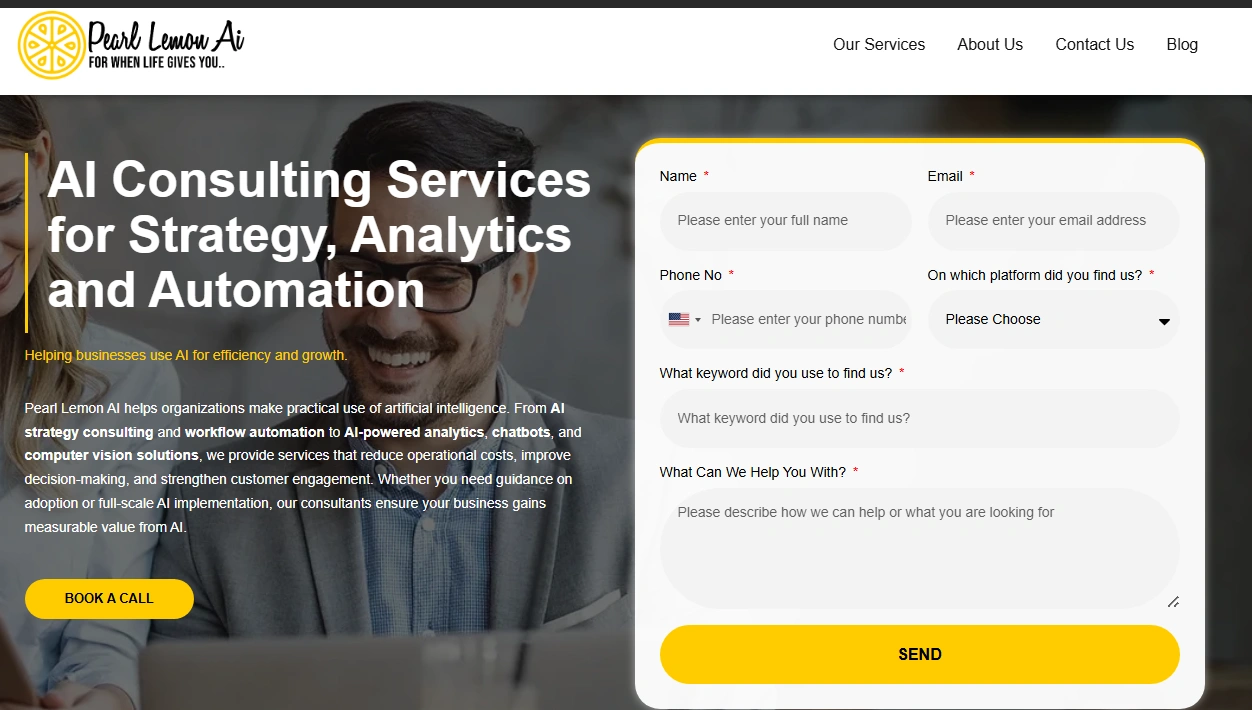
PearlLemon AI provides AI-driven solutions that support personalization across retail and eCommerce use cases. Their engagements often focus on applying AI to defined problems such as customer targeting, content personalization, or automation workflows.
Key features
- AI-driven personalization for customer targeting and engagement
- Automation and analytics supporting eCommerce workflows
- Custom AI solutions aligned to defined retail use cases
- Support for deploying AI across digital channels
Pros
- Flexible and approachable engagement model
- Suitable for targeted personalization projects
- Global delivery capability from a UK base
Cons
- Limited depth in large-scale personalization architecture
- Execution scope defined around specific use cases
- Best fit for tactical improvements rather than platform-level ownership
PearlLemon AI works well for retailers seeking focused AI enhancements, while execution first partners lead when personalization must operate at scale.
Final Thoughts
Personalization success in retail and eCommerce depends less on tools and more on who owns execution. The firms in this list differ in speed, depth, and accountability. Some prioritize scale and governance. Others focus on building systems that run in production and drive revenue.
The right partner aligns with your data maturity, operating model, and growth targets. Use this list to evaluate execution strength, ownership, and time to impact. Choose the firm that matches how your team works and how fast results need to show.
How Should RAG Be Designed to Prevent Hallucination?
Retrieval decides whether answers stay grounded or drift. Strong RAG design reduces hallucination before generation even begins.
- Effective systems pass verified spans, not full documents, and enforce per-source token limits to keep responses evidence-led.
- Ranking blends vector similarity, freshness, and source trust weight so systems of record consistently outrank secondary content.
- Retrieval runs behind source-level access checks, schema-aware query expansion, and deduplication to preserve precision and role safety.
A hardened embedding pipeline protects retrieval quality and blocks poisoned vectors early.